The best living room color palette ideas follow the 60-30-10 rule: one dominant color for about 60% of the room, a second color for 30%, and an accent for 10%. In a rental, build the 60% from your sofa, rug, and curtains if you cannot paint.
Below are five ready palettes with hex codes, a renter-friendly plan, and a free generator to test your own.
Dekor Ideas is reader-supported. When you buy through links on our site, we may earn an affiliate commission at no extra cost to you.
Free Furniture Buying Guide
The Furniture Buying Guide (free edition) — instant download.
Living Room Color Palette Ideas Explained: The 60-30-10 Rule
Living room color palette ideas start with a small set of colors, usually three, repeated through the room. The 60-30-10 rule splits them into 60% dominant, 30% secondary, and 10% accent, keeping the room balanced and making every item’s job clear.
The rule is a guideline, not a law. Homes & Gardens notes you can use many tones of your three colors, so the room still has depth.
The 60-30-10 split
60%: dominant color, such as walls, a rug, or the sofa.
30%: secondary color, such as curtains, an accent chair, or an accent wall.
10%: accent color, such as pillows, throws, art, and frames.
Source: Dekor Ideas; room examples from Angi.
Five Ready Palettes: Hex Codes You Can Copy
Each of these living room color palette ideas gives you a dominant, secondary, and accent color with hex codes. They’re Dekor example palettes, so check them on your screen and in your room’s own light before buying, and swap colors between roles if the balance feels off.
| Palette | 60% dominant | 30% secondary | 10% accent |
|---|---|---|---|
| Warm Neutral | Oatmeal #E8DFD0 | Soft taupe #B8A99A | Terracotta #B5654A |
| Cool Coastal | Soft white #F4F6F6 | Dusty blue #8FA8B8 | Navy #2F4458 |
| Earthy Green | Warm white #F2EFE6 | Sage #9CAF88 | Deep forest #2E4A3A |
| Cozy Rust | Cream #F1E8D8 | Warm gray #8C8479 | Rust #A8512F |
| Soft Mono | Light gray #E3E3E1 | Charcoal #4A4A48 | Mustard #D4A017 |
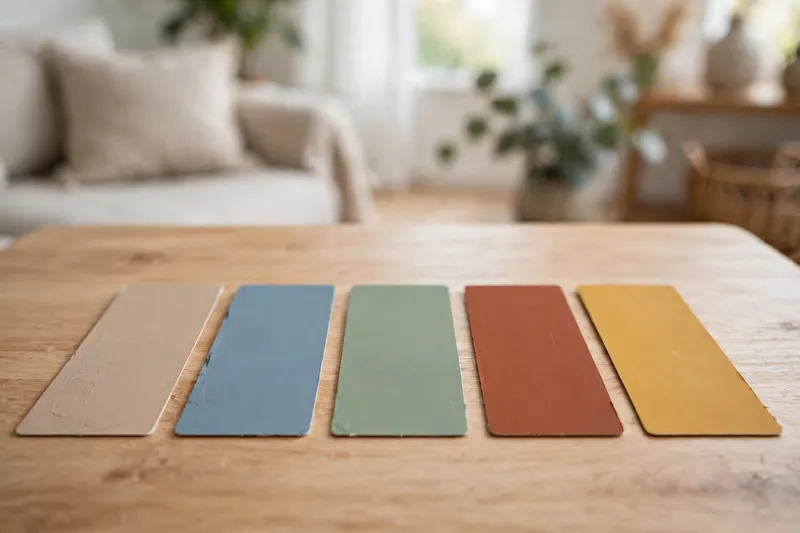
Warm Neutral: Calm and Easy to Live With
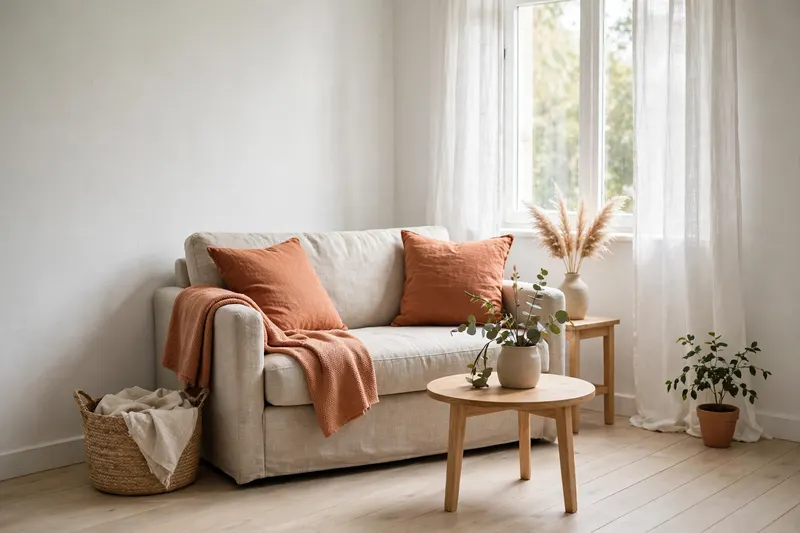
Warm Neutral uses oatmeal, soft taupe, and a terracotta accent for a calm, flexible base. It suits renters with beige or cream walls, because the dominant color matches what is already there. Add the terracotta in pillows, a vase, or a single piece of art.
Cool Coastal: Light, Airy, and Fresh
Cool Coastal pairs soft white with dusty blue and a navy accent. It feels bright and open, so it works well in a small living room with limited light. Use the dusty blue for curtains or a chair, and keep the navy to a few accents.
Earthy Green: Natural and Grounded
Earthy Green combines warm white, sage, and deep forest. It pairs well with wood furniture, plants, and woven textures. Put the sage on a sofa or curtains and the deep forest in pillows, frames, or a small side table.
Cozy Rust: Warm for Fall and Winter
Cozy Rust mixes cream, warm gray, and a rust accent for a warm, seasonal feel. Because the accent is only 10%, you can swap it out each season. Our fall decor guide for small apartments uses similar warm tones.
Soft Mono: Modern With One Bright Note
Soft Mono uses light gray, charcoal, and a mustard accent for a clean, modern look. The charcoal gives depth, and the mustard keeps the room from feeling flat. Use the mustard in one or two small pieces only, such as a throw or a lamp.
Renter Rules: Build the Palette Without Painting
If you can’t paint, these living room color palette ideas work by building the 60% from large items you already own, like the sofa, rug, and curtains. Treat your landlord’s wall color as part of the palette, then match the other two colors to it.
Start by naming your wall color, then pick a secondary and an accent that suit it. Angi lists walls, rugs, and large furniture as typical 60% items, and throws, pillows, and art as typical 10% items.
For damage-free ways to change a rental, see our renter-friendly upgrades guide.
Build Your Own: Using the Free Color Palette Generator
Build your own living room color palette ideas in minutes with our free generator. Start with one color you already own, like your sofa, then add a secondary and an accent, and use tints and shades of each three main colors for variety.
Try your palette with the Color Palette Generator, then check how the three colors look together before you buy a single item.
Small Living Room Tips: Keep the Count Low
In a small space, these living room color palette ideas work best with fewer colors, which make the room feel calmer and larger. Use a light dominant color, stick to three main colors, and add depth with texture, repeating each color at least twice so the room feels planned.
Repeating colors matters more than the exact shade. A rust pillow, a rust vase, and a rust frame read as one decision, while three different oranges read as clutter.
Test Before You Commit: Samples and Light
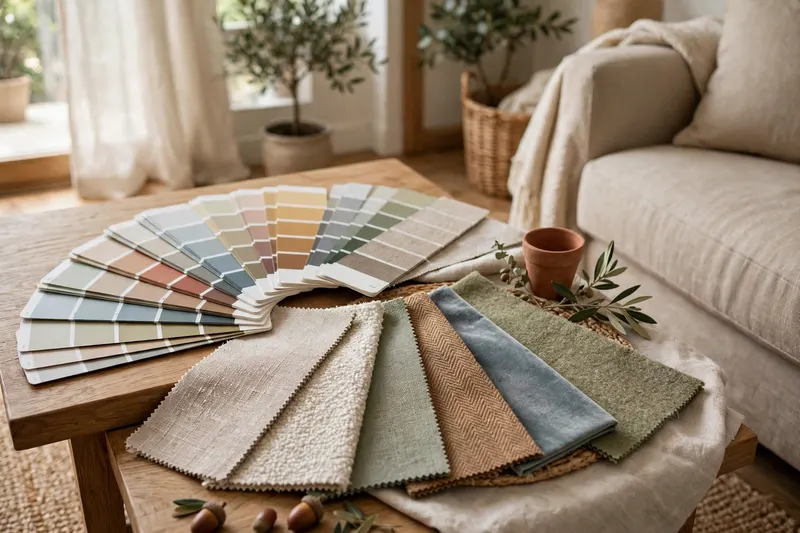
Before committing to any living room color palette ideas, test them in your own room, since light changes how colors look through the day. View fabric swatches and paint samples in the morning and evening, and judge them next to your floor and largest furniture.
Order small samples of rugs, curtains, or pillow covers where you can. If you can paint, use a large sample card rather than a tiny chip, and check it on more than one wall.
Common Mistakes: What Makes a Palette Feel Off
The most common living room color palette ideas mistakes are using too many colors, ignoring existing colors, and skipping repeats. Each makes a room feel random instead of planned, so avoid these five and your palette will feel balanced and intentional.
Using more than three main colors. Extra colors make a small room feel loud. Stick to three and vary their tones.
Ignoring your walls and floors. They are already part of the palette. Match your other colors to them.
Putting the accent everywhere. A 10% accent works because it is rare. Use it in a few places.
Choosing colors from a screen only. Screens can mislead. Check real samples in your room.
Skipping repeats. A color used once looks like a mistake. Repeat each color at least twice.
Frequently Asked Questions
Which palettes work best in a small living room?
Light, low-contrast palettes tend to work best in a small living room. Warm Neutral, Cool Coastal, and Earthy Green all use a light dominant color, which helps the room feel open. Keep to three main colors, repeat each one, and add depth with texture instead of extra colors.
What is the 60-30-10 rule in a living room?
The 60-30-10 rule splits a room’s colors into a dominant color for about 60%, a secondary color for 30%, and an accent for 10%. Angi gives walls, rugs, and large furniture as typical 60% items, and throws, pillows, and art as typical 10% items.
How do I choose a color palette if I cannot paint?
Treat your existing wall color as part of the palette, then build the dominant color from the sofa, rug, and curtains. Pick a secondary color and an accent that suit the walls. Use pillows, throws, and art for the 10% accent, since they are easy to change.
How many colors should a living room have?
The 60-30-10 rule uses three main colors. Homes & Gardens notes you can use many tones of each. More than three main colors can make a small living room feel busy, so add variety through texture and pattern.
Should my living room palette be warm or cool?
Choose warm colors, like oatmeal, terracotta, and rust, for a cozy feel, and cool colors, like soft white and dusty blue, for a lighter feel. Look at your floors and furniture first. Their undertones should match the palette, so the room feels consistent.
How do I test a palette before I buy?
Order small samples of fabric, rugs, or paint, and view them in the morning and evening light, next to your floor and sofa. Repeat each color at least twice in the room. Use our free generator to see the three colors together first.
Wrap-Up: Pick Three, Then Repeat Them
The best living room color palette ideas are simple. Pick three colors, split them 60-30-10, and repeat each one around the room. If you rent, build the 60% from your sofa, rug, and curtains, and let the walls stay as they are.
Start with one of the five palettes above, or build your own. Test samples in your own light before you buy.

Sarah Mitchell
Sarah Mitchell writes store guides for Dekor Ideas. We're an independent site not affiliated with American Furniture Warehouse. Her guides are based on retailer information, trade press, and shopper feedback, checked and updated as details change.