To work out how many rolls of wallpaper you need, multiply each wall’s width by its height, divide the total by one roll’s coverage, and round up. Then add a spare roll or about 10% extra.
For example, an 8-by-9-foot accent wall is 72 square feet. That is 2.6 peel-and-stick rolls, so order 3 and add a spare.
Dekor Ideas is reader-supported. When you buy through links on our site, we may earn an affiliate commission at no extra cost to you.
Free Furniture Buying Guide
The Furniture Buying Guide (free edition) — instant download.
How Many Rolls of Wallpaper Do I Need? The Four-Step Formula
To find how many rolls of wallpaper you need, divide your wall area (width × height, minus large openings) by one roll’s coverage, then round up to a whole roll. Check the coverage on the roll label, since it varies by product.
Formula: (wall width × wall height) ÷ roll coverage = rolls needed
You can check your numbers with our Paint & Wallpaper Calculator once you have your measurements.
Step 1: Measure Each Wall
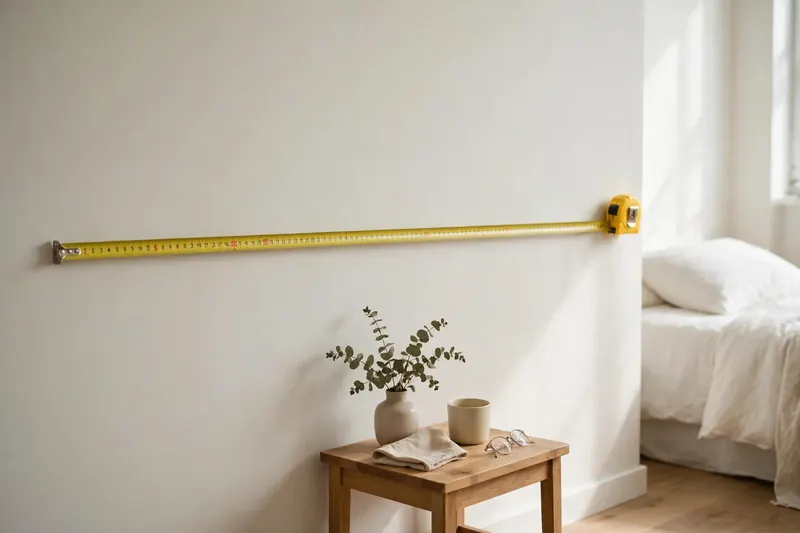
Measure the width and height of every wall you plan to cover, using a rigid tape measure. Write each number down as you go. Round up to the nearest foot so you never under-count, and measure from floor to ceiling.
Step 2: Multiply to Get Square Feet
Multiply the width by the height for each wall, then add the walls together. A wall 9 feet wide and 8 feet tall is 72 square feet. Keep each wall’s number separate until the end, so mistakes are easy to spot.
Step 3: Decide What to Subtract
Large doors and windows can be subtracted for a tighter number. Angi lists about 21 square feet for a single door. For one door or a few standard windows, many peel-and-stick sellers suggest skipping the subtraction, which leaves a safety margin.
Step 4: Divide and Round Up
Divide your total by the roll’s coverage, then round up to the next whole roll. You cannot buy part of a roll, so 2.6 rolls means 3. Add one spare roll, or about 10%, for mistakes and future repairs.
Formula at a glance
- Step 1–2: width × height = square feet.
- Step 3: subtract large openings if you want a tighter number.
- Step 4: divide by roll coverage, round up, add a spare.
- Source: Dekor Ideas.
Roll Sizes Explained: What One Roll Really Covers
A roll’s coverage depends on the product, so always read the label. A typical single roll covers 27 to 36 square feet, a double roll about 56 square feet, and many peel-and-stick rolls about 28 square feet. Using the wrong number is the most common reason people order too few.
When working out how many rolls of wallpaper you need in the UK and Europe, a standard roll is often about 10 meters long and 53 centimeters wide (roughly 33 feet by 21 inches). Check the product page for the exact size before you divide.
Roll coverage numbers
- 27–36 sq ft: one traditional single roll.
- About 56 sq ft: one double roll.
- About 28 sq ft: most RoomMates peel-and-stick rolls (it varies by product).
- Source: Dekor Ideas; traditional roll sizes from Angi, peel-and-stick coverage from RoomMates.

Worked Examples: Accent Wall, Small Bedroom, and Traditional Paper
These worked examples show how many rolls of wallpaper you need using real numbers, covering a single accent wall, a whole small bedroom, and a large traditional job. Swap in your own measurements and roll coverage to get your answer.
Accent Wall With Peel-and-Stick
An accent wall 9 feet wide and 8 feet tall is 72 square feet. A roll covering 28.18 square feet gives 72 ÷ 28.18 = 2.6 rolls, so order 3. RoomMates suggests adding one extra roll if you are new to hanging, which makes 4.
Small Bedroom, All Four Walls
A room 10 by 12 feet with 8-foot ceilings has a perimeter of 44 feet. That gives 44 × 8 = 352 square feet. At 28.18 square feet per roll, 352 ÷ 28.18 = 12.5, so order 13 rolls. Add 10% and you get 14.
If you subtract a 21-square-foot door, the total drops to 331 square feet, or about 12 rolls. We suggest ordering 13 so one miscut does not leave you short.
Large Room With Traditional Paper
To see how many rolls of wallpaper you need, Angi’s example uses 400 square feet and a 31-square-foot roll. Adding 10% for waste gives 440 square feet, or 14.2 single rolls, which rounds up to 16 single rolls (8 double rolls).
Worked example: accent wall
- 72 sq ft wall (9 ft × 8 ft).
- 2.6 rolls at 28.18 sq ft per roll.
- Order 3, plus 1 spare if you are new to hanging.
- Source: Dekor Ideas, using the RoomMates example.
Pattern Repeat: Why Patterned Paper Needs Extra
Patterned wallpaper needs extra paper because each strip must line up with the next one. A pattern repeat is the distance between two matching design elements. The bigger the repeat, the more paper you cut away, so check the repeat on the product page before you order.
Plain or textured papers with no match waste the least. Large floral or geometric patterns waste the most. If you are unsure, order the spare roll and ask the seller for the repeat length.
Peel-and-Stick or Traditional: What Changes for Renters
Peel-and-stick is the usual renter choice since it’s removable and hung without paste, and the math for how many rolls of wallpaper you need stays the same. Roll sizes and packs differ, so check how your wallpaper is sold and your lease rules before ordering.
| Question | Peel-and-stick | Traditional |
|---|---|---|
| Coverage per roll | About 28 sq ft (varies) | 27–36 sq ft single, about 56 double |
| How it is sold | Check the listing | Often in double-roll packs |
| Extra to order | One spare roll if new | About 10% for waste |
| Best for renters? | Yes, if your lease allows it | Usually no, it needs paste |
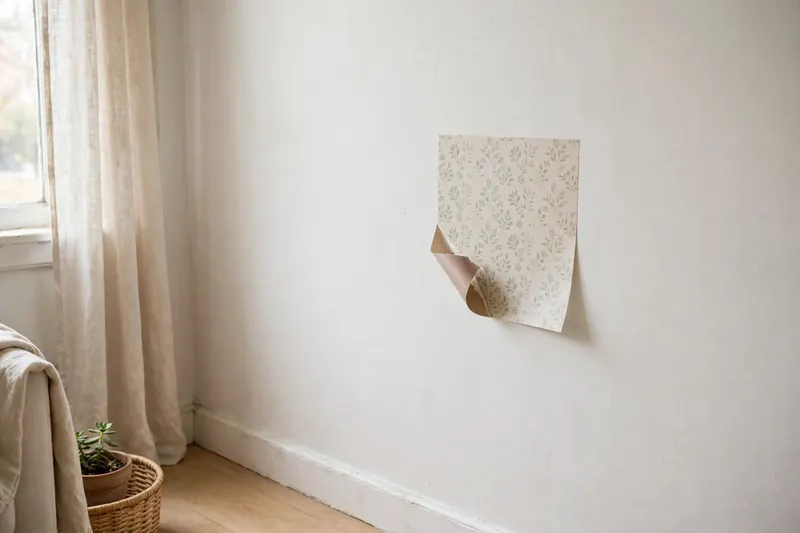
Not sure about the color or pattern? Order a sample first, and build a palette around it with the Color Palette Generator.
Our renter-friendly upgrades guide covers more damage-free options.
Measure Before You Order: Your Checklist
Before deciding how many rolls of wallpaper to order, measure each wall’s width and height and write every number down, along with the roll coverage on the label, pattern repeat, and large openings. Five minutes of checking prevents the most common problem: running out of paper halfway up the wall.
Measure first: your wallpaper checklist
- Measure the width and height of every wall to be covered.
- Multiply to get square feet, and keep each wall separate.
- Read the roll coverage on the label or product page.
- Check the pattern repeat if the paper has a pattern.
- Decide whether to subtract large doors and windows.
- Round up, then add a spare roll or about 10%.
Common Mistakes: What Leaves You Short
The most common mistakes when figuring out how many rolls of wallpaper to order are rounding down, guessing roll coverage, and ignoring the pattern repeat. Each can leave you a strip short, and a reorder may not match, so avoid these five and your order will cover the wall the first time.
Rounding down. You cannot buy part of a roll. Always round up.
Guessing roll coverage. Coverage varies by product. Read the label.
Ignoring the pattern repeat. Patterns waste paper. Check the repeat first.
Ordering the exact amount. One miscut leaves you short. Add a spare roll or about 10%.
Reordering from a different batch. Rolls are printed in batches, and color can differ slightly. Order everything at once.
Leftovers: Spare Rolls and Batch Numbers
After working out how many rolls of wallpaper you need, keep spare rolls for future repairs, since wallpaper is printed in batches and a later order may not match. Store them in a cool, dry place away from sunlight and moisture, and ask the seller about returns on unopened rolls.
Angi also suggests leaving wallpaper in the room for 24 hours before hanging, so it adjusts to the room.
Frequently Asked Questions
How many rolls do I need for a small bedroom?
For a 10-by-12-foot room with 8-foot ceilings, the walls total 352 square feet. With rolls covering about 28 square feet, you need about 13 rolls, or 14 with a 10% allowance. Subtracting a door lowers it to about 12. Check your own measurements and roll coverage.
How many rolls do I need for an accent wall?
Multiply the wall’s width by its height, divide by the roll’s coverage, and round up. A wall 9 feet wide and 8 feet tall is 72 square feet. With 28.18 square feet per roll, that is 2.6, so order 3 rolls, and add a spare if you are new to hanging.
Do I subtract windows and doors?
You can subtract large openings for a tighter number. Angi lists about 21 square feet for a single door. For one door or a few standard windows, RoomMates suggests skipping the subtraction, which leaves a margin for mistakes. When in doubt, do not subtract and add the spare roll.
How much extra wallpaper should I buy?
Buy about 10% extra, or one spare roll, to cover cutting errors and future repairs. Angi recommends 10% more than your measured total. Patterned paper may need more because of the repeat. Order everything at once, because rolls from a later batch can differ slightly in color.
How many rolls of peel-and-stick do I need?
Use the same formula: wall area divided by roll coverage, rounded up. Many peel-and-stick rolls cover about 28 square feet, but it varies by product, so check the listing. Add one spare roll if you are new to hanging, since mistakes are easy to make.
What is a double roll of wallpaper?
A double roll is twice the length of a single roll and covers about 56 square feet, according to Angi. Many sellers price by the single roll but pack in double rolls, so you may need to order in multiples of two. Check how your wallpaper is sold.
Wrap-Up: Measure, Divide, Round Up
To answer how many rolls of wallpaper do I need, measure each wall, multiply, divide by the roll’s coverage, and round up. Then add a spare roll or about 10% extra. Check the label, the pattern repeat, and how the paper is sold.
Use the worked examples above as a template and swap in your own numbers. A few minutes of measuring now saves a second order later.

Sarah Mitchell
Sarah Mitchell writes store guides for Dekor Ideas. We're an independent site not affiliated with American Furniture Warehouse. Her guides are based on retailer information, trade press, and shopper feedback, checked and updated as details change.